More Than Five Decades of Care:
The San Felipe Humanitarian Alliance Story
Since 1971, the San Felipe Humanitarian Alliance has followed one simple conviction: every child deserves a safe place to grow, and every person caught in crisis deserves someone who shows up.
That conviction began on a ranch in northern New Mexico. Over the next five decades it carried us to foster-care classrooms across the United States, refugee camps in the Balkans, hurricane-struck Nicaragua, and drought-stricken Ethiopia. Here's a look back at the milestones that shaped who we are.
Where it all began: a ranch near Taos
Our story starts at San Felipe del Rio, a 147-acre ranch near Taos, New Mexico, where abused and neglected children found something many had never known: a nurturing, extended-family home.
The ranch grew into a full continuum of care, with on-site residential homes, an off-site treatment center for severely disturbed children, and a ground-breaking transitional home that helped young men and women pursue higher education and job training on their way to independence.
The work drew attention from one of the most respected names in mental health. Dr. Karl Menninger of the Menninger Foundation called the ranch "the finest group home in the world" and said it "should be the model for all the country."
Raising the bar for child welfare nationwide
What worked in Taos was worth sharing. We assessed 19 Menninger Foundation "Villages" in Indiana and Kansas and used the findings to build a national model for group home standards. We also co-wrote a policy manual for Blueberry Treatment Centers in New York, aimed at setting a national standard for the care of schizophrenic and autistic children.
Bringing people together became a hallmark of our work:
New Mexico: We organized and funded a national conference advocating for child welfare.
New York: With Blueberry Treatment Centers, we hosted the international conference "Children in Distress," featuring Oliver Sacks, Bruno Bettelheim, Kita Hara, Mira Rothenberg, and Ted Kennedy.
Portland, Oregon: We co-founded Northwest Advocates for Children and organized a national conference on training child and youth providers, which produced a "Marshall Plan for Children."
San Diego: With the Menninger Foundation, we co-sponsored a national child welfare conference at the University of San Diego.
Kansas City, Missouri: With L'Arche, we developed a national conference to advance the care of developmentally disabled children.
Teaching through film
Some of our most lasting work happened on screen. "The Ultimate Challenge," our five-part, 200-minute training series on foster care, won seven major film festival awards and is still used worldwide by foster and adoptive parents, social workers, and educators. It debuted, together with a 300-page companion manual, before an international audience in Dubrovnik.
Later, through a 15-state consortium, we produced two films built on the PRIDE model (Parent Resources for Information, Development, and Education): one on recruiting and supporting resource parents as team members in child protection, and one on trauma-informed care. They tackle real challenges caregivers face, from a child's history of sexual abuse to adolescence and bi-racial adoption. Today they're used in all 50 states, across several Eastern European countries and was translated into 12 languages.
Along the way, we published "Cross-Cultural Training for Foster and Adoptive Children," ran film workshops across the country, and consulted with the Child Welfare League of America (CWLA) on a curriculum to raise national standards for foster and adoptive care. Later collaborations with CWLA included a film on adoption, and we developed a CD-ROM on foster care and adoption for social workers, students, and parents.
Standing with homeless youth
We directed a comprehensive survey of homeless teens across the United States. Its published findings helped draw international attention to homelessness in America.
We then assessed residential programs for homeless teenagers nationwide and gathered the approaches that worked best. That research shaped New Avenues for Youth in Portland, an outgrowth of Northwest Advocates, which offers a full wrap-around program, from shelter and education to the transitional services that lead to independence. We also worked with community groups in San Francisco, San Diego, New York, Kansas, and especially Portland to meet the needs of homeless children and their families.
Going global: Eastern Europe and the Balkans
As the Iron Curtain fell, we brought our experience abroad. In Budapest, we led workshops to improve care for institutionalized children and began planning a conference to share new child care methods with ten Eastern Bloc countries.
In Croatia, we consulted with Croatian Social Services as they built foster care and adoption programs, and supplied training materials to support them. We also wrote a full training and policy manual for Suncokret, a grassroots social services organization in Zagreb, and helped them recruit and train international volunteers for refugee centers in Croatia and Bosnia. That manual helped Suncokret become the first non-profit social services agency in a post-Communist country, and it has became a model in disaster relief.
One project captured our hopes especially well. In Toposka, Croatia, we renovated a former Serbian military post into a recreation center for refugee children. With local and international volunteers, we ran a summer program that helped kids feel like kids again, bringing together children of different religious and ethnic backgrounds in the hope of building tolerance, respect, and lasting peace.
Answering the call in times of crisis
By the late 1990s, our work increasingly meant showing up when disaster struck.
Hurricane Mitch, Nicaragua. After one of the deadliest Atlantic hurricanes on record, we delivered timely, targeted relief and established a permanent medical clinic in Nueva Vida, a relocation camp outside Managua overlooked by both international aid groups and the Nicaraguan government.
Kosovo. We provided emergency medical care, food, clothing, and shelter to thousands of displaced Kosovars in Albanian refugee camps, and helped develop social service programs reaching up to 300,000 uprooted people. After the peace settlement, we built a resettlement plan to help refugees return home, and recruited and trained workers from the Czech Republic, Italy, Spain, and Japan to staff the relocation camps we organized.
Closer to home. When the Cerro Grande fire forced evacuations near Los Alamos, New Mexico, we delivered hygiene supplies and toys to several hundred families. In Southern California, we developed a therapeutic camp for emotionally disturbed children, teens, and their families.
A new century: 2000–2017
The new millennium brought new crises, and new partnerships to meet them.
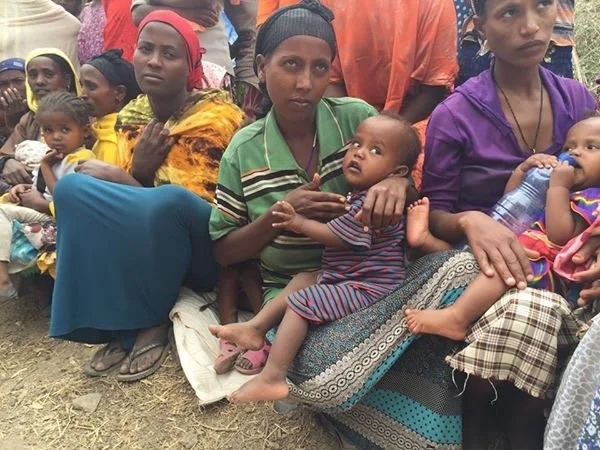
Water when it mattered most. During the first surge of violence in Darfur, we partnered with the IRC to fund water and health facilities in Kass and Tawila, Sudan. Later, with GOAL-Ireland, we funded water in northern Ethiopia during one of the worst droughts in the country's history.
Safe places for women. We opened two shelters in Darfur for survivors of gender-based violence, and a shelter in Thailand's Mae Hong Son province protecting Burmese refugee women from domestic abuse.
Rebuilding community. In Batticaloa, Sri Lanka, we built a community center and school where conflict-affected families can gather and learn.
New beginnings in America. Through First Things First, refugee mothers learn literacy, English, and life skills as they build new lives here. With Wilderness Adventure, we sent 60 inner-city kids on a wetlands and ocean expedition that builds persistence, endurance, and courage.
Coming full circle. With the Child Welfare League of America, we led kinship and foster care trainings in Hungary, Romania, Bulgaria, Croatia, and the Czech Republic.
The work continues, and you can be part of it
From a single ranch in Taos to refugee camps, shelters, and classrooms on four continents, our mission hasn't changed: protect children, support families, and show up for people when they need it most.
Every milestone here was made possible by donors, volunteers, and partners who believed in that mission. If our story moves you, we hope you'll help write its next chapter.
Give to the San Felipe Humanitarian Alliance today.